|
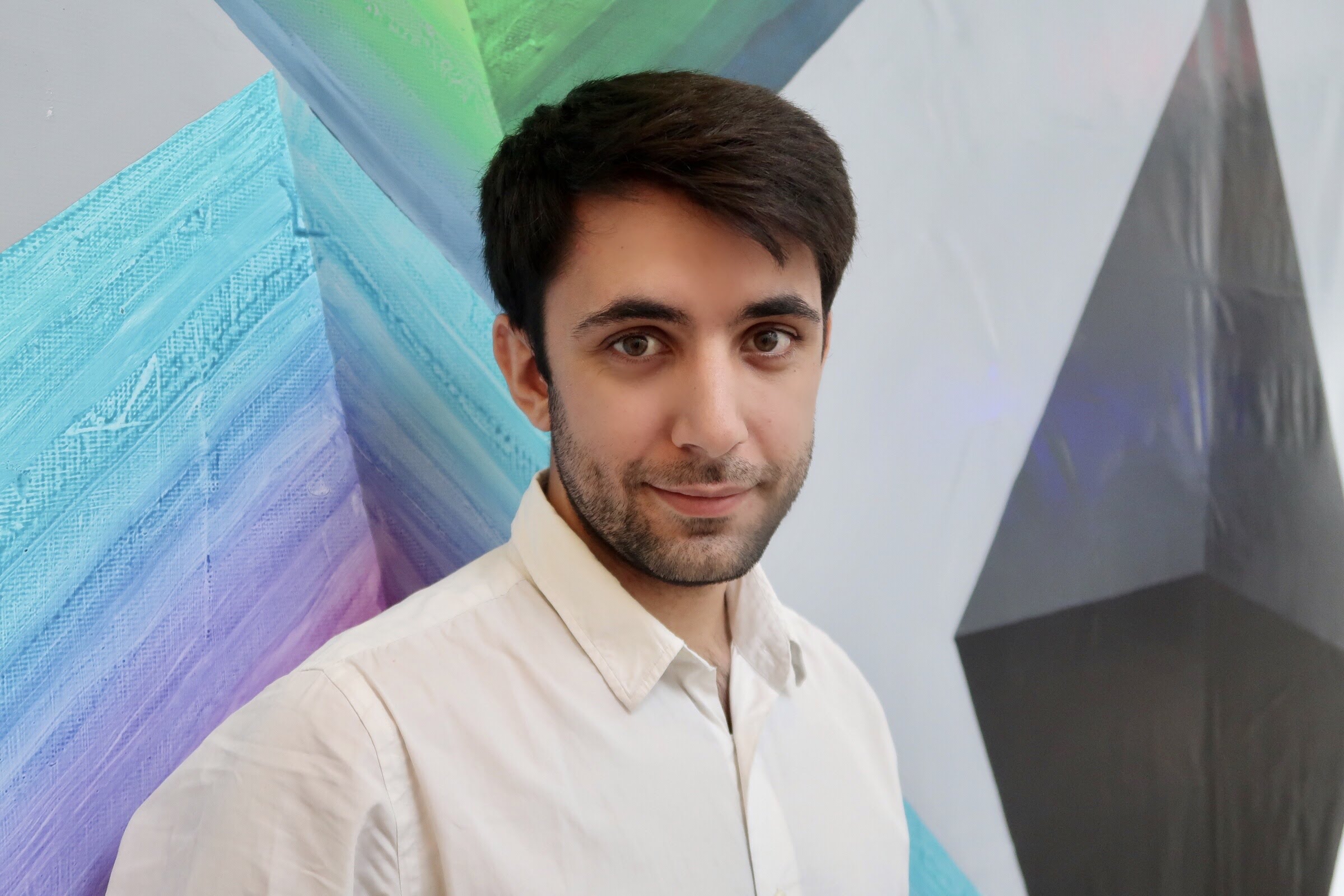
I am a Staff Research Scientist and Weather Science Lead at Google DeepMind in London. I completed my PhD in Computer Science at MIT CSAIL, advised by Leslie Pack Kaelbling, Tomás Lozano-Pérez, and Josh Tenenbaum. Before MIT, I completed the double degree in Mathematics and Engineering Physics at UPC - CFIS in Barcelona as valedictorian. Research: I work on machine learning for Science and Sustainability. My team develops AI weather forecasting systems which achieve state-of-the-art predictions for everyday and extreme weather, including tropical cyclones. I've also worked on AI4Math, meta-learning, algorithmic discovery, and encoding&discovering physics inductive biases. Twitter / Email / CV / Google Scholar / LinkedIn |
|
|
|
|
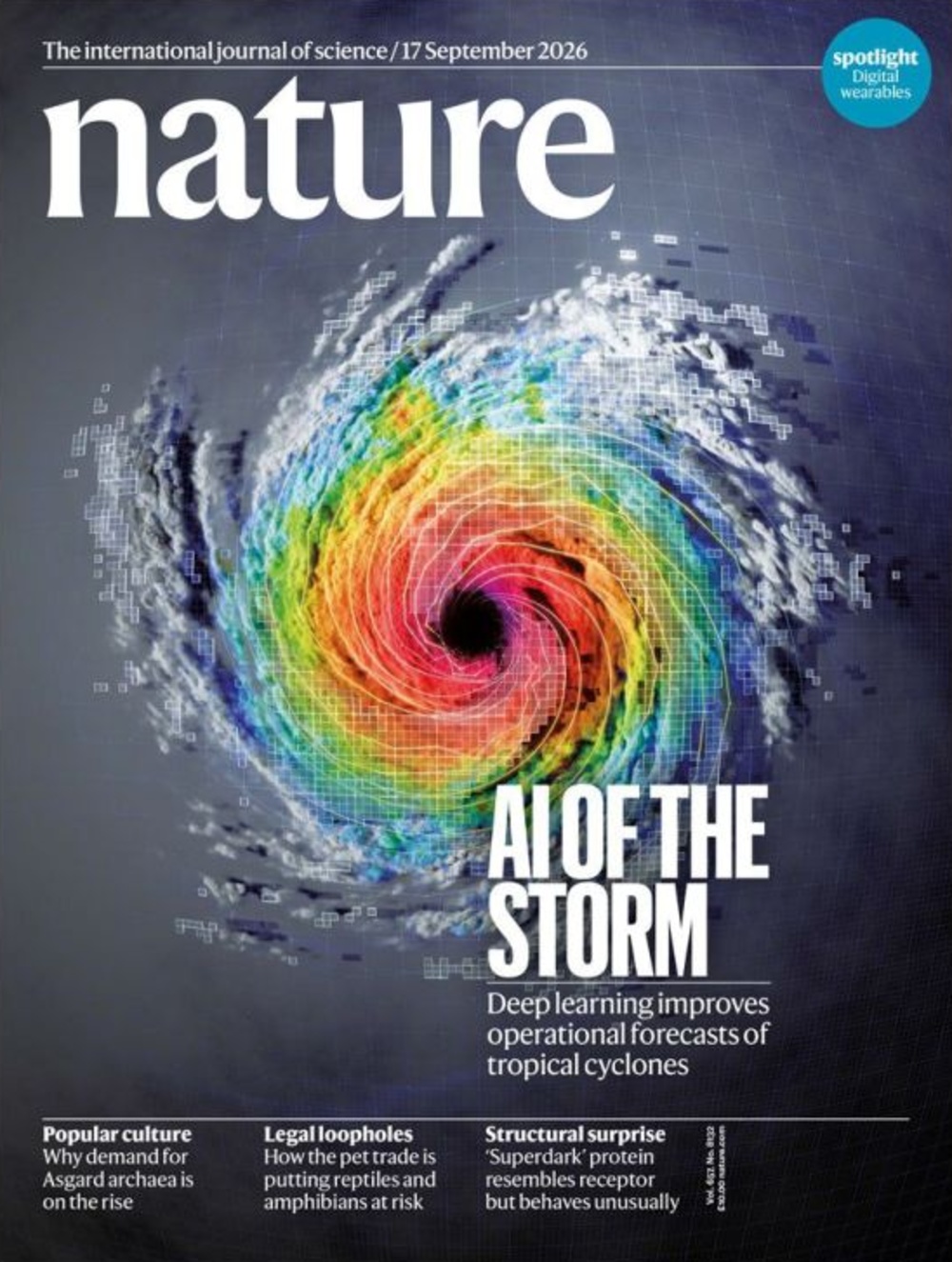
Ferran Alet*, Thomas R. Andersson*, Ilan Price*, Stratis Markou*, Andrew El-Kadi*, Dominic Masters* et al. Nature, 2026 • Featured on the Cover of Nature 2026 Gizmodo Science Fair Winner Paper (Nature) Nature Cover Code & Weights (GitHub) DeepMind Blog Nature News & Views Ask a Scientist Video (4.5M views) Ask a Scientist Q&A Hurricane Melissa Film Gizmodo (quoted) Wired (quoted) New Scientist (quoted) Fast Company (quoted) NYT (quoted) NYT (Isaias) CNN (Isaias) CNN (Melissa) The Guardian FOX Weather (TV interview) NOAA (quoted) La Vanguardia (interview) We present WeatherNext Cyclones, an operational machine learning model forecasting tropical cyclone tracks, intensity, and structure worldwide, providing up to an extra day of advance warning compared to state-of-the-art numerical physics engines. |
|
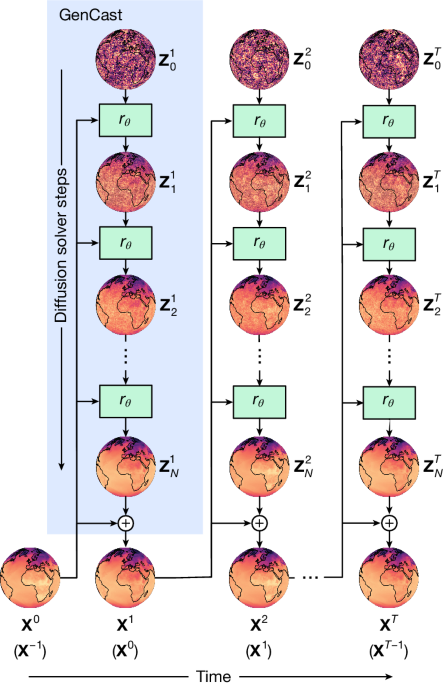
Ilan Price*, Álvaro Sánchez-González*, Ferran Alet*, Thomas R. Andersson* et al. Nature, 2024 Paper (Nature) The New York Times Financial Times The Guardian MIT Tech Review Ars Technica Nature News A generative diffusion model for global ensemble weather forecasting up to 15 days out, outperforming the operational European Centre for Medium-Range Weather Forecasts (ECMWF ENS) across 97% of target variables and extreme weather events. |
|
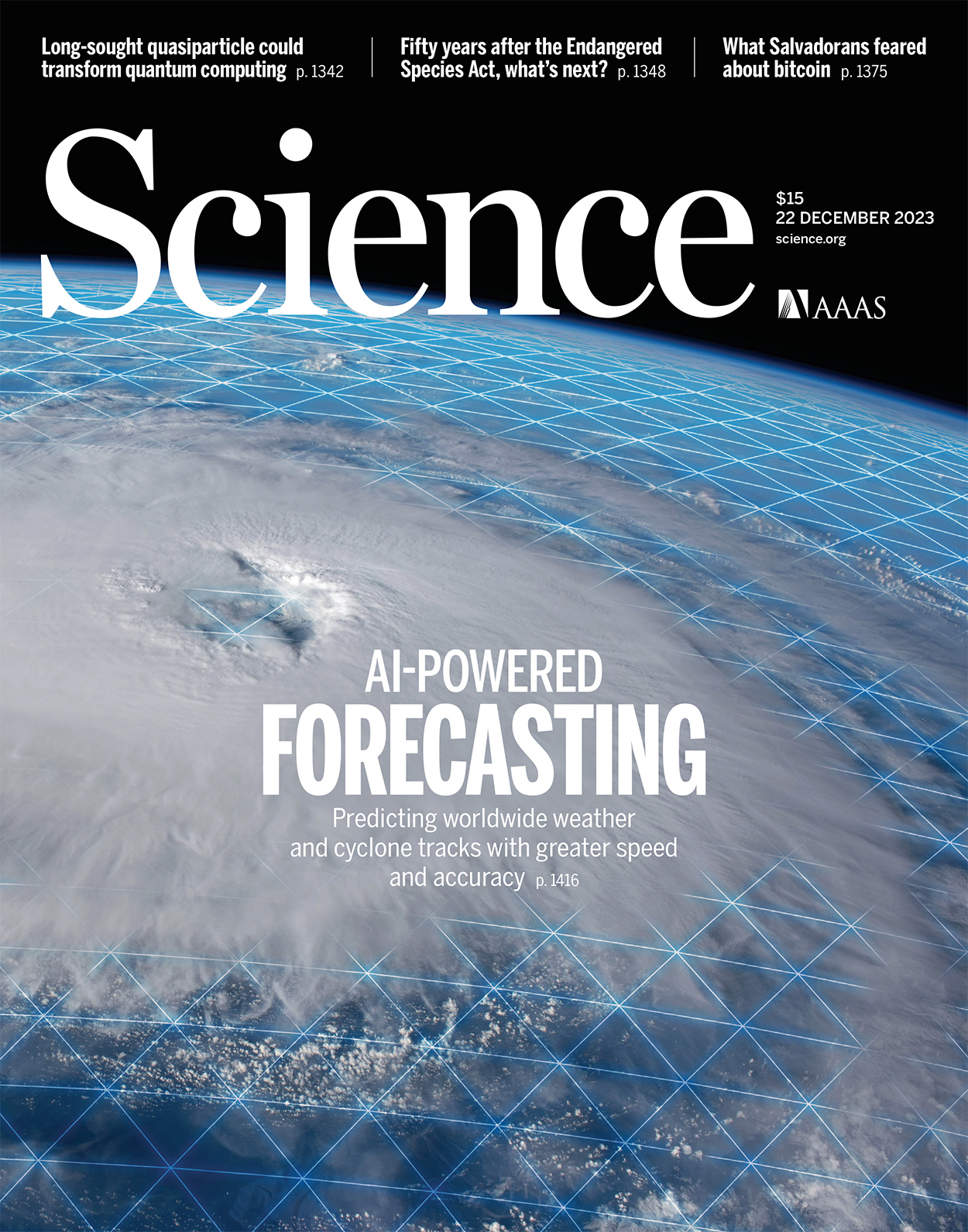
Remi Lam*, Álvaro Sánchez-González*, Matthew Willson*, Peter Wirnsberger*, Meire Fortunato*, Ferran Alet*, Shreya Ravuri* et al. Science, 2023 • Featured on the Cover of Science MacRobert Award Winner 2024 Science Breakthrough of the Year Runner-up Paper (Science) Science Cover Science News The Washington Post The New York Times BBC News Financial Times The Guardian Wired The Verge El País (quoted) La Vanguardia Diari ARA A machine learning weather forecasting system based on graph neural networks operating on icosahedral multi-mesh representations, generating 10-day global forecasts in under a minute with higher accuracy than ECMWF HRES on over 90% of verification variables. |
|
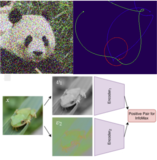
Ferran Alet, Maria Bauza, Kenji Kawaguchi, Nurullah Giray Kuru, Tomás Lozano-Pérez, Leslie Pack Kaelbling NeurIPS, 2021 • Spotlight at Physical Inductive Biases Workshop Paper (arXiv) 15-minute Talk We optimize unsupervised objectives tailored to each specific test input at prediction time. By adapting where we act, we bypass generalization gaps and can enforce a wide spectrum of physical and domain-specific inductive biases. |
|
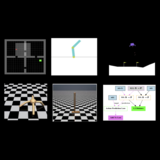
Ferran Alet*, Martin Schneider*, Tomás Lozano-Pérez, Leslie Pack Kaelbling ICLR, 2020 Paper (OpenReview) Code (GitHub) MIT News (interview) VentureBeat By meta-learning domain-specific computer programs rather than neural network weights, we dramatically increase out-of-distribution generalization, discovering novel curiosity exploration strategies in simple toy environments that transfer to complex visual domains. |
|
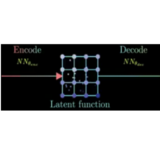
Ferran Alet, Adarsh K. Jeewajee, Maria Bauza, Alberto Rodriguez, Tomás Lozano-Pérez, Leslie Pack Kaelbling ICML, 2019 • Oral Presentation (Long Talk) Paper (arXiv) Oral Talk Code (GitHub) We introduce Graph Element Networks, combining graph neural networks and attention to learn adaptive computational meshes that map continuous physical functions to functions, with applications across continuum mechanics, Poisson problems, and neural scene representation. |
|
|

|
S. Rasp*, B. Babenko*, D. Masters*, A. El-Kadi*, S. Merchant*, G. Shalev*, I. Price*, F. Zyda, …, Ferran Alet*, A. Bell, P. Battaglia, Á. Sánchez-González* arXiv preprint arXiv:2609.03582, 2026 Paper (arXiv) DeepMind Blog Bloomberg (interview) TechCrunch (interview) The Verge (quoted) El País (interview) We present WeatherNext 3, learning directly from real-time geostationary satellite imagery and station observations to deliver hourly global forecasts up to 5 km resolution (5x sharper than WN2) and a 50% improvement in precipitation accuracy, powering forecasts for over 1.7 billion users across Search, Maps, Pixel, and Google Cloud. |
|
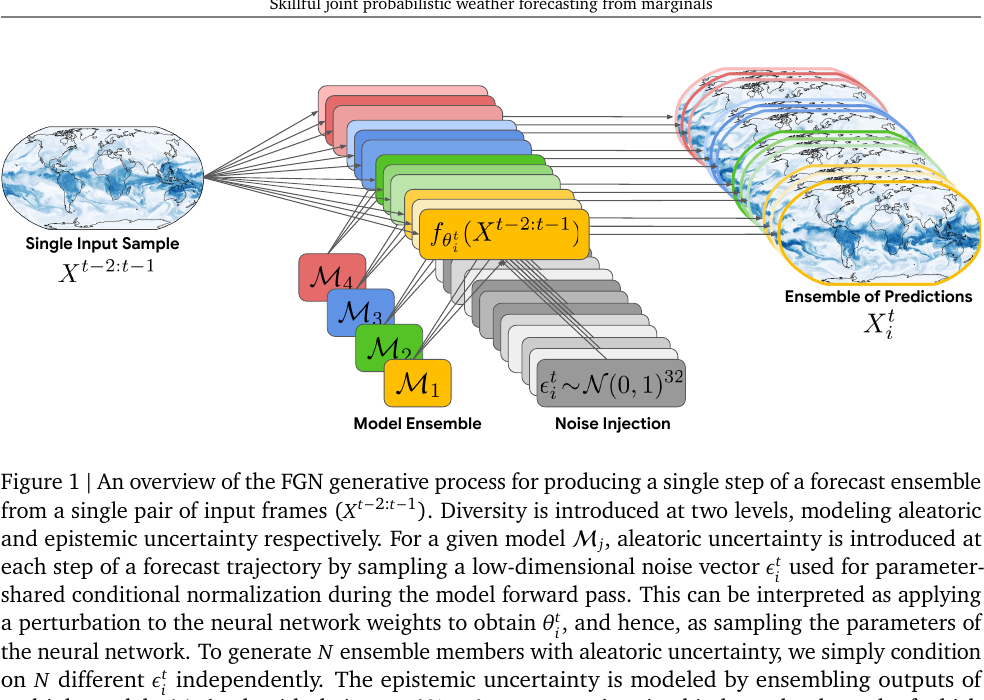
Ferran Alet*, Ilan Price*, Andrew El-Kadi, Dominic Masters, Stratis Markou, Thomas R. Andersson, Jack Stott, Remi Lam, Matthew Willson, Álvaro Sánchez-González, Peter Battaglia arXiv preprint arXiv:2506.10772, 2025 Paper (arXiv) Code (GitHub) Bloomberg (quoted) The Guardian The Verge We present WeatherNext 2, a probabilistic global weather forecasting model trained to predict joint multi-variable weather distributions from marginal loss formulations, demonstrating state-of-the-art fidelity on extreme event forecasts and commodity/energy metrics. |

|
Y. Wang, M. Bennani, J. Martens, S. Racanière, S. Blackwell, …, Ferran Alet et al. arXiv preprint arXiv:2509.14185, 2025 Paper (arXiv) Quanta Magazine Feature Using machine learning and non-convex optimization to search for candidate blow-up singularities and hidden glitches in the partial differential equations governing fluid dynamics. |

|
Gemini Team (incl. Ferran Alet) Technical Report, 2025 Report (arXiv) Google Blog TechCrunch Reuters Wired Next-generation multimodal reasoning and frontier agentic evaluation across scientific domains. |
|
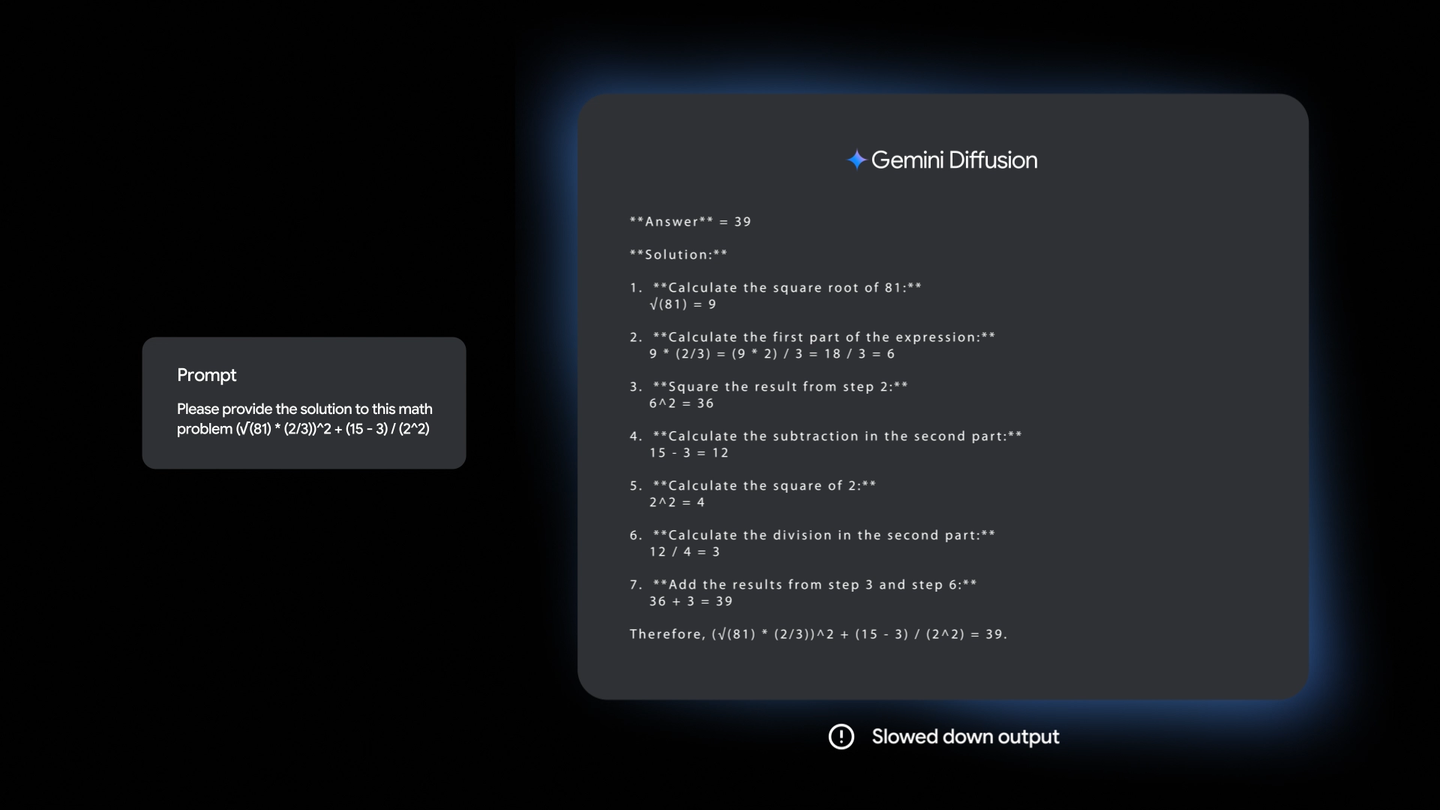
Gemini Diffusion Team (incl. Ferran Alet) Google DeepMind Blog, 2025 Google DeepMind VentureBeat TechCrunch Advancing generative diffusion architectures for multi-domain foundation models. |
|
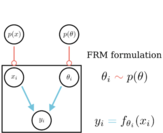
Ferran Alet, Clement Gehring, Tomás Lozano-Pérez, Kenji Kawaguchi, Joshua B. Tenenbaum, Leslie Pack Kaelbling arXiv preprint arXiv:2412.21149, 2024 Paper (arXiv) We analyze fundamental contradictions in standard empirical risk minimization for continuous function spaces, deriving an axiomatic framework for loss functions defined directly over function spaces. |

|
Maria Bauza, Ferran Alet, Yen-Chen Lin, Tomás Lozano-Pérez, Leslie Pack Kaelbling, Phillip Isola, Alberto Rodriguez International Journal of Robotics Research (IJRR), 2022 • (Conference version in IROS, 2019) Paper (IJRR) Project Website Code (GitHub) MIT News A diverse benchmark dataset of 250 objects pushed 250 times each with calibrated RGB-D tracking, establishing the first precision benchmark for probabilistic meta-learning and physical dynamics modeling. |
|
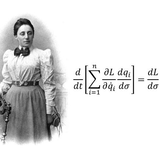
Ferran Alet*, Dylan Doblar*, Allan Zhou, Joshua B. Tenenbaum, Kenji Kawaguchi, Chelsea Finn NeurIPS, 2021 Paper (arXiv) Website Code (GitHub) Interview (10k views) We propose to encode continuous dynamical symmetries as self-supervised conservation losses and meta-learn them directly from trajectories, discovering invariant conservation laws that regularize sequence prediction. |
|
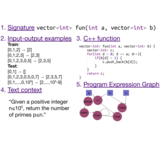
Ferran Alet*, Javier Lopez-Contreras*, James Koppel, Maxwell Nye, Armando Solar-Lezama, Tomás Lozano-Pérez, Leslie Pack Kaelbling, Joshua B. Tenenbaum ICML, 2021 • Spotlight Paper & Benchmark Website A few-shot program induction benchmark capturing over 200,000 subprograms obtained by running real-world code instruction-by-instruction to generate rich input/output execution specifications. |
|
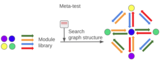
Ferran Alet, Erica Weng, Tomás Lozano-Pérez, Leslie Pack Kaelbling NeurIPS, 2019 Paper Code (GitHub) We formalize neural relational inference as modular meta-learning and accelerate modular optimization by two orders of magnitude, making combinatorial module routing practical. |
|
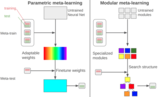
Ferran Alet, Tomás Lozano-Pérez, Leslie Pack Kaelbling CoRL, 2018 Paper (arXiv) Video Code (GitHub) We train neural network sub-modules to be mutually composable, adapting to unseen tasks by recombining primitive modules in novel configurations akin to linguistic compositionality. |
|
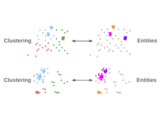
Ferran Alet, Rohan Chitnis, Tomás Lozano-Pérez, Leslie Pack Kaelbling IJCAI, 2018 Paper (arXiv) Video We propose a stream clustering algorithm defining recurring entities as dense modes in continuous space with provable PAC performance guarantees. |
|
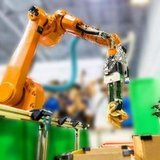
Andy Zeng, Shuran Song, Kuan-Ting Yu, Elliott Donlon, François R. Hogan, Maria Bauza, Da-Sheng Ma, Orion Taylor, Melody Liu, Emi Romo, Nima Fazeli, Ferran Alet, Nikhil Chavan-Dafle, Rachel Holladay, Ian Morona, Prem Nair, Dan Green, Ian Taylor, Weber Liu, Thomas Funkhouser, Alberto Rodriguez ICRA, 2018 Best System Paper Award by Amazon Robotics 1st Place in Stowing (ARC '17) Paper (arXiv) Talk Project Website MIT News The vision and manipulation architecture for the MIT-Princeton robot team winning the stowing task at the Amazon Robotics Challenge in Nagoya, Japan. |
|
|
|
|
|
|
I deeply enjoy mentoring and collaborating with students and researchers. I was honored with the MIT Outstanding Direct Mentor Award (awarded to 2 PhD students across all of MIT). Here are some of the talented researchers I have had the privilege to mentor:
|
|
© Ferran Alet • Hosted on Netlify |